


What is Paintless Dent Repair and How Does It Work?
We’ve all experienced it: that moment of frustration when you spot a new ding or an unsightly scratch on your car’s bumper. Whether it’s from a runaway shopping cart, a tight parking maneuver, or just daily wear and tear, these blemishes can quickly detract from your vehicle’s appearance and even impact its resale value.
The good news is that restoring your car’s flawless look doesn’t always require a costly trip to a traditional body shop. In fact, an increasingly popular and convenient solution is available right at your doorstep.
We will explore the many benefits of mobile Paintless Dent Repair (PDR). We’ll delve into how this innovative service works, why it’s a game-changer for minor cosmetic damage, and how it compares to conventional repair methods. We will also discuss how mobile PDR can efficiently address various issues, including those related to paintless dent and bumper scratches.
Join us as we uncover why mobile PDR is becoming the preferred choice for vehicle owners seeking hassle-free, high-quality, and cost-effective repairs.
Paintless Dent Repair (PDR) is a highly specialized technique used to remove minor dents and dings from a vehicle’s body panels without affecting the original paint finish. This method relies on the metal’s memory and the paint’s elasticity, allowing skilled technicians to meticulously massage the dent out from the underside of the panel. The process involves a unique set of tools and a deep understanding of body mechanics, ensuring a non-invasive repair that preserves the factory finish.
At its core, PDR is about precision and patience. Technicians use specialized rods and picks to apply pressure to the backside of the dent, slowly working the metal back to its original form. They often use reflective boards or lights to magnify the dent, allowing them to see the subtle contours of the metal and ensure a perfectly smooth finish. The goal is to restore the panel’s original shape without sanding, body filler, or repainting, which are hallmarks of traditional auto body repair.
The Science Behind Paintless Dent Repair
The effectiveness of PDR is rooted in the inherent properties of modern vehicle manufacturing. Car panels, especially those made of steel or aluminum, have a “memory,” meaning they tend to return to their original shape when manipulated properly. The factory paint, applied with advanced techniques, is remarkably flexible and durable, allowing it to stretch and contract without cracking during the PDR process. This elasticity is crucial for successful paintless repairs.
While PDR is primarily associated with metal panels, it can also address certain types of damage on flexible components, such as polyurethane bumpers. For these bumpers, the repair often involves carefully applying pressure and sometimes gentle heat to coax the material back into shape. The specialized tools are designed to manipulate metal or plastic with extreme precision, targeting specific pressure points to reduce and eliminate the dent gradually. This careful manipulation ensures the panel’s structural integrity remains intact, delivering a seamless repair.
Common Types of Damage Suitable for PDR
PDR is not a universal solution for all types of vehicle damage, but it is exceptionally effective for a wide range of common cosmetic imperfections. Understanding what PDR can fix is key to choosing the right repair method.
Here are the types of damage most suitable for Paintless Dent Repair:
- Hail Damage: One of the most common applications of PD is for hail damage, as hail often causes numerous small, shallow dents across multiple panels.
- Door Dings: Small, circular dents typically caused by another car door swinging open in a parking lot. These are prime candidates for PDR.
- Minor Creases: Shallow creases that haven’t stretched the metal too severely and where the paint remains intact can often be repaired with PDR.
- Bumper Indentations: While bumpers are often plastic, minor indentations or shallow dents where the paint is undisturbed can sometimes be massaged out.
- Minor Body Line Dents: Dents that occur on the creases or body lines of a vehicle, provided the paint is not broken.
- Shopping Cart Dents: Similar to door dings, these are usually shallow and impact-focused, making them ideal for PDR.
The critical factor for PDR suitability is that the paint surface must be intact, meaning no chips, cracks, or deep scratches that have penetrated the clear coat and color layers. If the paint is damaged, traditional repair methods involving sanding and repainting will likely be necessary.
The Key Advantages of Mobile Paintless Dent Repair Services
In June 2026, the automotive service industry continues its shift towards convenience, and mobile Paintless Dent Repair exemplifies this trend perfectly. The benefits of opting for a mobile PDR service extend far beyond just fixing a dent; they encompass significant time savings, cost efficiency, and unparalleled on-site convenience, aligning perfectly with modern vehicle owners’ busy lifestyles.
Mobile PDR brings the repair shop to you, eliminating the logistical headaches of traditional repairs. This means no more rearranging your schedule, finding alternative transportation, or waiting days for your vehicle to be returned. The service is designed to integrate seamlessly into your day, whether you’re at home, work, or even another convenient location. This efficiency is a major draw, especially for those who value their time and seek hassle-free vehicle maintenance solutions.
Why Vehicle Owners Choose Mobile Paintless Dent Repair
The decision to choose mobile PDR is often driven by a combination of practical benefits that directly address common frustrations with traditional auto body repair.
- No Rental Car Needed: One of the most significant advantages is avoiding the need for a rental vehicle. Since the repair is performed at your location, your car remains accessible, and you won’t incur additional rental costs or the inconvenience of picking up and dropping off a temporary vehicle.
- Same-Day Service: Many mobile PDR repairs, especially for minor dings and dents, can be completed within an hour or two. This quick turnaround means your vehicle is back to its pristine condition almost immediately, minimizing disruption to your daily routine.
- Driveway or Office Parking Lot Service: Imagine having your car repaired while you’re working, relaxing at home, or running errands. Mobile PDR technicians arrive equipped to perform the repair in your driveway, office parking lot, or any other suitable location, offering unparalleled flexibility.
- Hassle-Free Scheduling: Mobile services typically offer more flexible scheduling options, making it easier to book an appointment that fits your busy life rather than trying to fit into a traditional shop’s limited hours.
These factors combine to make mobile PDR a highly attractive option for vehicle owners seeking efficient, convenient, and stress-free cosmetic repairs.
Environmental Benefits of Paintless Restoration
Beyond convenience and cost, mobile PDR offers significant environmental advantages, making it a more sustainable choice for auto care. In an era when environmental consciousness is increasingly important, choosing eco-friendly repair methods can help protect a healthier planet.
- Zero Chemical Waste: Traditional auto body repair often involves the use of body fillers, primers, paints, and clear coats, all of which contain chemicals that can contribute to environmental pollution during manufacturing, application, and disposal. PDR, by contrast, uses no such chemicals, producing virtually zero chemical waste.
- No Paint Fumes: The absence of painting means no harmful volatile organic compounds (VOCs) are released into the atmosphere. This not only benefits the environment but also creates a healthier working environment for technicians and prevents vehicle owners from being exposed to paint fumes.
- Eco-Friendly Auto Care: By preserving the original factory finish, PDR reduces the demand for new paint products and the energy required for their production and application. This inherently makes it a more sustainable repair method.
- Reduced Carbon Footprint: The localized nature of mobile PDR, where technicians travel to the customer, can potentially reduce the overall carbon footprint compared to customers driving to and from a centralized body shop, especially if multiple trips are involved.
By opting for paintless dent repair, vehicle owners are not only choosing a superior repair method but also making a conscious decision towards more environmentally responsible auto maintenance.
Comparing Mobile PDR with Traditional Auto Body Shop Repair
When faced with vehicle damage, understanding the differences between mobile Paintless Dent Repair and traditional auto body shop repair is crucial for making an informed decision. While both aim to restore your vehicle’s appearance, their processes, costs, and convenience factors vary significantly.
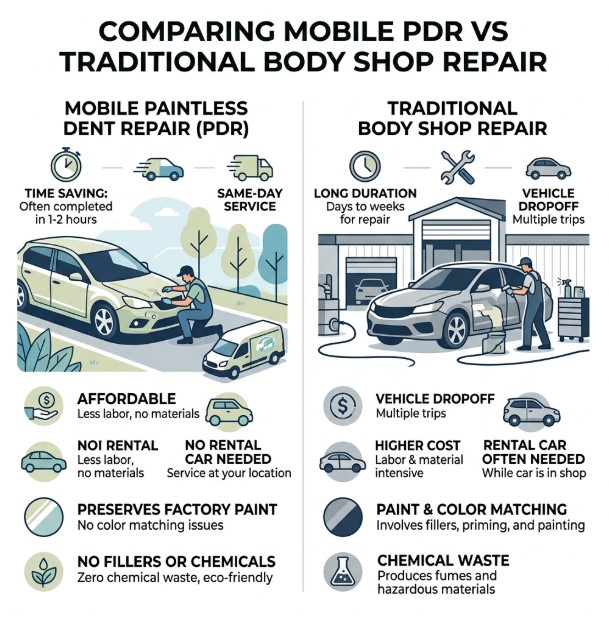
| Feature | Mobile Paintless Dent Repair (PDR) | Traditional Body Shop Repair Mobile.
- Duration: Often completed in 1-2 hours for minor dents, allowing for same-day service.
- Cost: Generally more affordable, as it requires less labor and no materials like paint or fillers.
- Paint Matching: The original factory paint is preserved, eliminating any concerns about color mismatch.
- Filler Usage: No body fillers are used, maintaining the vehicle’s original structural integrity and finish.
- Convenience: Technicians come to your location, saving you time and transportation costs.
Traditional Body Shop Repair
- Duration: Can take several days or even weeks, especially for more extensive damage requiring multiple steps.
- Cost: Typically more expensive due to the labor-intensive process, material costs, and overhead.
- Paint Matching: Requires careful color matching and blending, which can sometimes result in slight variations from the original factory paint, particularly on older vehicles or complex colors.
- Filler Usage: Involves sanding down the damaged area, applying body filler to reshape the surface, and then sanding it smooth.
- Convenience: Requires you to drop off your vehicle at the shop, often necessitating a rental car or alternative transportation.
While PDR is ideal for minor dents where the paint is undisturbed, traditional body shop repair remains essential for more severe damage, such as deep scratches that have compromised the paint, cracked bumpers, or major collision damage. For instance, if your bumper has a significant crack, a professional repair might involve plastic welding or specialized adhesives before painting, as detailed in guides like AutoZone’s on how to repair a cracked bumper. Similarly, for comprehensive collision repair, facilities like Crash Champions in Walnut Creek, CA, or Brentwood, CA, are equipped to handle extensive structural and cosmetic work.
The choice between PDR and traditional repair ultimately depends on the type, severity, and location of the damage. For minor cosmetic imperfections, mobile PDR offers a superior, more efficient, and often more cost-effective solution. However, understanding the limitations of PDR and knowing when to seek comprehensive professional auto body repair is crucial for maintaining your vehicle’s long-term condition and value. For insights into the cost implications of various repair options, including DIY fixes versus professional paint jobs, exploring a bumper scuff repair cost guide can be highly beneficial.
Addressing Paintless Dent and Bumper Scratches Simultaneously
While Paintless Dent Repair (PDR) is specifically designed for dents where the paint remains intact, the reality is that vehicle damage often comes in combinations. A parking lot mishap might leave you with a minor indentation on your bumper, along with unsightly scuffs or clear-coat scratches. Addressing these cosmetic imperfections simultaneously, especially on flexible components like bumpers, requires a nuanced approach.
Bumpers, typically made of plastic or fiberglass, are prone to various forms of superficial damage. These can include minor scuffs from rubbing against an object, clear-coat scratches that affect only the outermost protective layer, or even paint transfer from another vehicle. While PDR can effectively remove the dent, the scratches will need separate attention. Fortunately, many mobile technicians are also skilled in minor paint restoration techniques that complement PDR.
For light scratches and scuffs, the repair process often involves careful cleaning, compounding, and polishing. Products like rubbing compounds can effectively remove clear coat scratches by gently abrading the surface, leveling out the imperfection. For deeper scratches that haven’t penetrated the base coat, touch-up paint kits, such as the DupliColor Scratch Fix All-in-1, offer an integrated solution for preparation, color application, and clear coat sealing. However, for more comprehensive guidance on fixing plastic bumper scratches, it’s always wise to consult detailed how-to resources.
When dealing with a dent and associated scratches on a plastic bumper, the PDR technique would first be applied to remove the indentation. Once the bumper’s shape is restored, the focus shifts to the paint damage. Paint transfer, for example, can often be removed with specialized cleaners or clay bars without repainting. For actual scratches, the technician might employ a multi-step process:
- Assessment: Carefully determine the depth of the scratch. A simple “fingernail test” can help: if your nail catches in the scratch, it’s likely deeper than the clear coat. For a detailed DIY guide on assessing and repairing bumper scratches, My Detail Buddy provides step-by-step instructions for fixing car bumper scratches.
- Preparation: Clean the area thoroughly to remove dirt, wax, and contaminants.
- Scratch Removal/Reduction: For clear coat scratches, a high-quality rubbing compound and polish can often make them disappear or significantly reduce their visibility. For deeper scratches, a specialized touch-up paint or repair kit may be applied. Ricks Free Auto Repair Advice also offers a comprehensive, step-by-step guide to scratched-bumper repair, covering various damage levels.
- Finishing: The repaired area is then polished to blend seamlessly with the surrounding paint, restoring the bumper’s cosmetic appeal.
The flexibility of plastic bumpers allows for various repair techniques, making them good candidates for cosmetic restoration even when damage extends beyond simple dents. Understanding these options can help you save your car’s face and maintain its overall aesthetic. For further insights into maintaining your vehicle’s appearance, exploring resources on plastic bumper repair can be valuable.
While mobile PDR technicians can often handle minor paint imperfections alongside dent removal, extensive paint damage, such as large areas of chipped paint or deep gouges that expose the plastic, will still require the services of a traditional body shop. For more severe damage, understanding when to repair versus replace your bumper is crucial, as highlighted in “Bumper Damage 101: Know When to Fix & How” from 4 Wheel Parts. Professional body shops, such as Will’s Auto Body in Concord, CA, or B&S Hacienda Auto Body in San Ramon, CA, specialize in comprehensive bumper painting and repair that PDR alone cannot address.
Frequently Asked Questions About Mobile Dent Restoration
Vehicle owners often have questions and concerns when considering mobile dent restoration services. Understanding PDR’s capabilities and limitations, and setting realistic expectations, are key to a satisfactory repair experience. Here, we address some of the most common inquiries regarding mobile PDR.
How long does a typical mobile repair take?
One of the most appealing aspects of mobile PDR is its efficiency. For minor dings and dents, a typical repair can be completed in 1 to 2 hours. This quick turnaround is a significant advantage over traditional body shop repairs, which can take days. The exact duration depends on several factors:
- Size and Severity of the Dent: Smaller, shallower dents are naturally quicker to repair than larger or more complex ones.
- Location of the Dent: Dents on easily accessible panels are faster to work on than those in difficult-to-reach areas or near structural components.
- Number of Dents: If there are multiple dents, the total time will increase accordingly.
For most common door dings and hail damage, the efficiency of mobile PDR means you can often have your vehicle restored while you’re at work, enjoying a coffee, or attending to other tasks, making it a truly convenient and time-saving solution.
Can PDR fix deep scratches or chipped paint?
While PDR is incredibly effective for dents where the paint is intact, it has clear limitations when it comes to paint damage.
- Deep Scratches: PDR cannot directly fix deep scratches that have gone through the clear coat and color layers of your vehicle’s paint. These types of scratches require traditional methods involving sanding, priming, and repainting to restore the finish.
- Chipped Paint: Similarly, if the paint has chipped away, PDR cannot replace the missing paint. In such cases, touch-up paint may be used to minimize visibility, but a perfect restoration often necessitates repainting the affected area.
- Clear Coat Scratches: For very light scratches that affect only the clear coat, a skilled PDR technician may be able to polish them out. However, this is a separate process from dent removal and depends on the scratch’s depth.
If your vehicle has both a dent and significant paint damage, a professional assessment is crucial. A mobile PDR technician can advise whether the dent can be removed via PDR, whether the paint damage is minor enough to be addressed with touch-up techniques, or whether it warrants a visit to a traditional body shop for a comprehensive paint repair. For more extensive damage, professional collision centers, such as Crash Champions in Richmond, CA, or Pittsburg, CA, offer specialized services that go beyond PDR capabilities.
Is mobile repair as durable as shop-based repair?
Yes, when performed correctly by a certified and experienced technician, a mobile PDR repair is just as durable and permanent as a dent repair performed in a traditional shop. The key difference is the method, not the longevity of the fix.
- Permanent Fix: PDR permanently restores the metal to its original shape. Since no paint is removed or added, there’s no risk of paint peeling, cracking, or fading, which can sometimes occur with traditional repainting if not done perfectly.
- Lifetime Quality: The original factory paint is preserved, which is generally more durable and resilient than aftermarket paint. This means the repair maintains the vehicle’s original finish and offers comparable resistance to environmental factors and wear.
- Structural Stability: PDR does not involve drilling holes, grinding, or the use of fillers, thereby maintaining the panel’s structural integrity. The metal is reshaped back to its original form.
- Professional Standards: Reputable mobile PDR services employ highly trained, certified technicians who adhere to stringent professional standards, ensuring high-quality, lasting repairs.
The durability of a PDR repair is directly linked to the technician’s skill and the suitability of the damage for the PDR process. When these conditions are met, vehicle owners can expect a permanent, high-quality restoration that seamlessly blends with the rest of the vehicle.
Conclusion
The emergence and widespread adoption of mobile Paintless Dent Repair have revolutionized how we approach minor vehicle damage. From frustrating door dings to unsightly bumper indentations, mobile PDR offers a compelling alternative to traditional body shop repairs, prioritizing convenience, efficiency, and environmental responsibility.
We’ve explored how this innovative technique leverages the natural properties of your vehicle’s materials to restore panels without compromising the original paint. The advantages are clear: significant time and cost savings, the unparalleled convenience of on-site service, and a reduced environmental footprint due to the absence of chemicals and paint fumes. For many common types of damage, mobile PDR is the smarter, more sustainable choice.
While PDR excels at addressing dents with intact paint, we also understand its limitations and the importance of knowing when more extensive damage necessitates the expertise of a traditional auto body shop. However, for the vast majority of everyday cosmetic imperfections, mobile PDR provides a permanent, high-quality solution that preserves your vehicle’s factory finish and value.
In June 2026, as vehicle aesthetics continue to play a crucial role in ownership satisfaction and resale value, embracing smart auto maintenance solutions, such as mobile PDR, is more important than ever. It’s an investment in your vehicle’s appearance and longevity, delivered with unmatched convenience. For those seeking comprehensive auto body repair options, including specialized plastic bumper repair, we encourage you to explore our services at plastic bumper repair to ensure your vehicle receives the expert care it deserves.